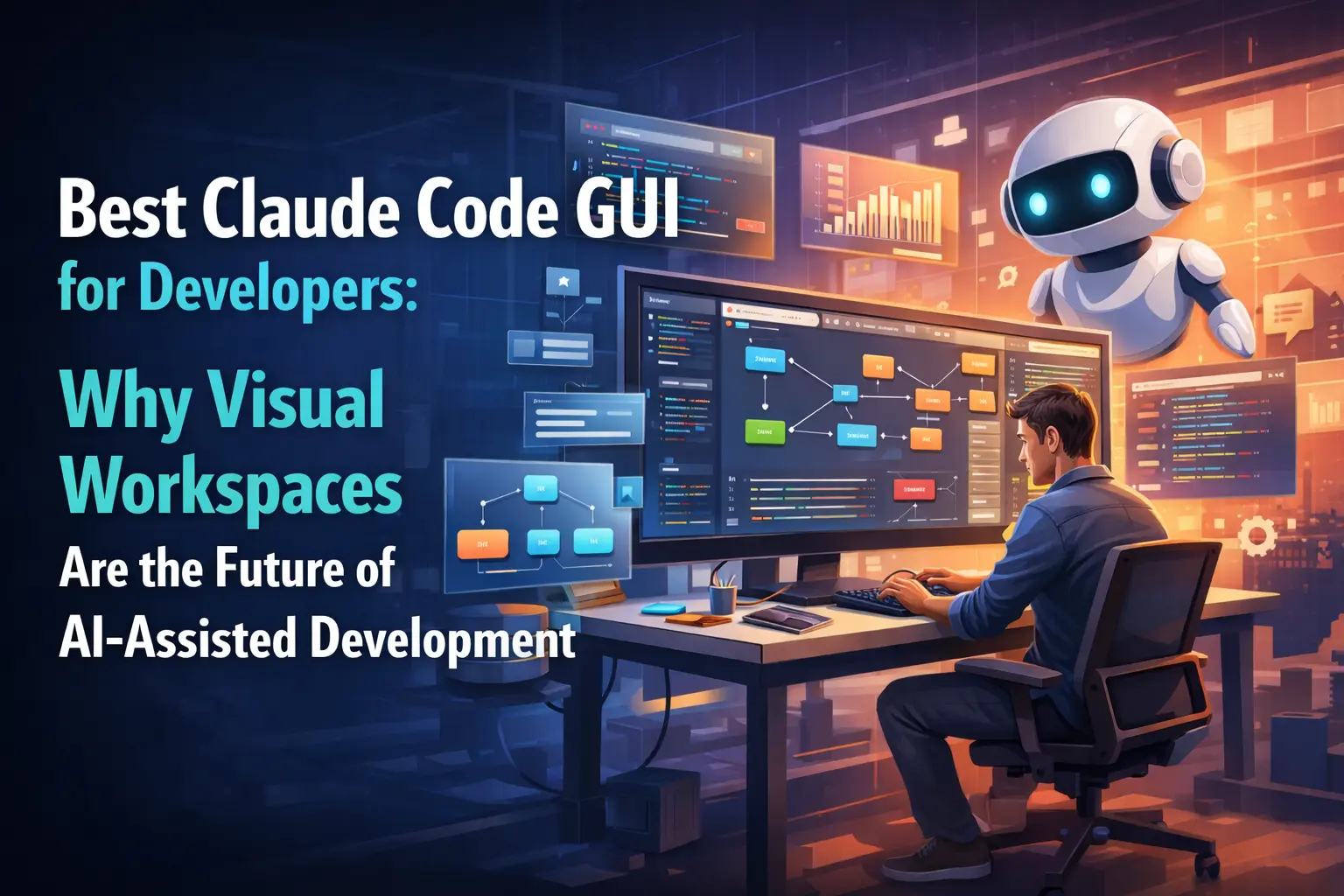
Best Claude Code GUI For Developers: Why Visual Workspaces Are The Future Of AI-Assisted Development
AI coding assistants have changed how modern teams build software. Tools like Claude Code as well as Codex can write features, refactor code, and generate documentation, as well as even help shape architecture decisions. But as workflows become more agent-driven, one challenge becomes obvious: The end of the line has run out.
Developers, builders, and product managers now have what Anthropic is calling the Claude Code GUI, which puts structure, order, and control into what are very dynamic AI processes.
The platform includes a very visual workspace for Codex and Claude Code, which in turn makes it easy to manage sessions, review changes, coordinate tasks, and work with multiple coding agents without loss of context.
Why AI Coding Workflows Need a Visual Workspace
In the past, traditional terminal-based workflows have worked well for single-threaded coding tasks. But with AI-assisted development the situation is different.
A present-day AI coding workflow includes the following:.
- multiple agent sessions running in parallel
- documentation and markdown planning
- mockups and UI notes
- architecture diagrams
- CSV data transformations
- code review and git decisions
- task handoffs between humans and agents
When developers have these artifacts distributed across many tools, they spend time switching between tabs and reestablishing context, and in the meantime what changed is lost.
A visual workspace, which does this by consolidating all elements into one environment. Instead of coding in siloed prompts, there is a structured workflow that ties together files, sessions, tasks, and edits.
For teams that are handling multiple feature sets, bug fixes, and product planning at the same time, this is very useful.
The Best Claude Code GUI: Why Nimbalyst Stands Out
Among today’s AI coding tools, Nimbalyst rises to the top as the most fully featured solution for agent-first development. It is designed as a visual workspace that works with Codex and Claude Code, for which it is a dedicated platform. It also is a single location for users to manage their sessions, files, and tasks.
What is unique for Nimbalyst is its high volume of interaction with coding teams.
Instead of a terminal-only environment that developers have to work in, the platform has added a visual layer that supports the following:.
- session management
- task organization
- file tracking
- inline diff review
- visual editing
- multi-agent collaboration
This is very much for developers but also for builders and product managers, which in turn have access to planning documents, feature specs, mockups, and implementation progress.
Dedicated Workspace for Visual Editing
Nimbalyst’s greatest asset is its support of visual editing, which extends to many file types.
Users can work directly with: Users have at least:.
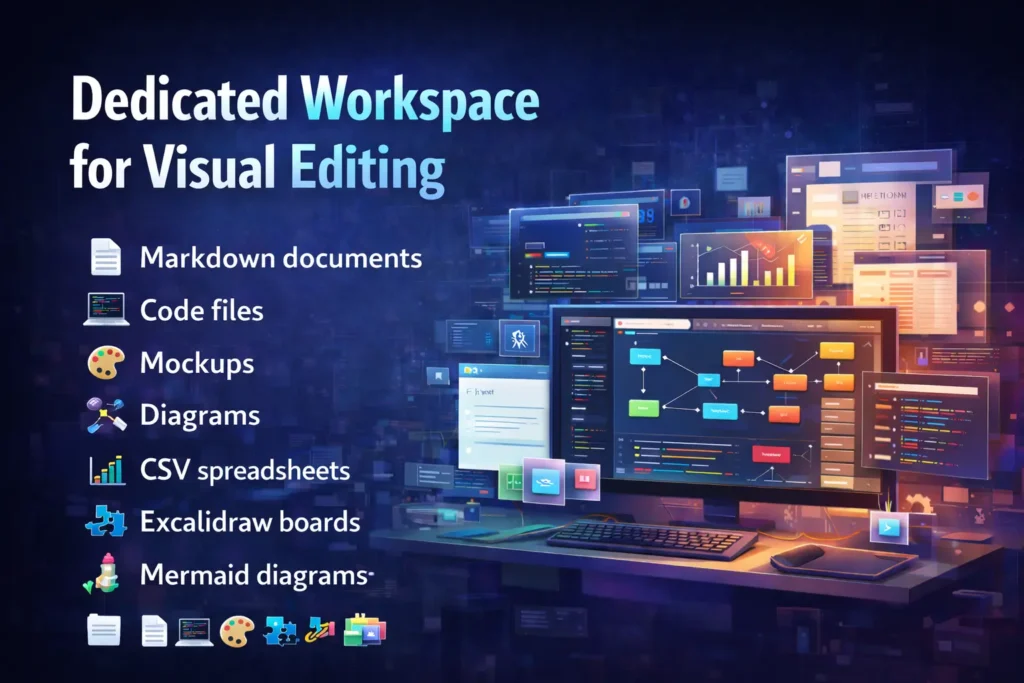
- markdown documents
- code files
- mockups
- diagrams
- CSV spreadsheets
- Excalidraw boards
- Mermaid diagrams
- data models
In the agent-aware workspace, Claude Code and Codex are able to understand project context, which in turn improves workflow greatly when users are editing assets.
This is a huge improvement over the past method of jumping between separate markdown, spreadsheet, design, and IDE tools.
Better Control Over AI-Generated Code Changes
An issue that teams see with AI-assisted development is agent changes.
A quality Codex GUI should not perform auto saves of edits. Developers should have control.
Nimbalyst gets around it with inline diff review, which in turn allows users to see AI-generated changes right in the file. Each edit can be
- accepted
- rejected
- manually adjusted
- iterated further with the agent
This creates a very safe and open environment for development. Instead of that, which was a black box of which the teams were to blindly trust the code that was put out, it introduces a workflow in which there is still a large-scale fast movement but also a great degree of human input and review.
At this level of detail, which in particular includes:.
- multi-file refactors
- PR review preparation
- documentation updates
- UI iteration
- schema and data edits
Smarter Session and Task Management
AI development falls apart when there are too many sessions.
Developers may include separate agents for the following:.
- bug fixes
- testing
- documentation
- feature branches
- architecture research
- UI experiments
In the absence of structure, sessions are hard to resume but also difficult to do.
A professional agent management platform should have easy session orchestration.
Nimbalyst runs simultaneous agent sessions, which puts users in a central workspace for their active, pending, and completed tasks. Also, it’s the company’s task management layer, which does what it takes to set priorities, define workflow stages, and make sure action is in line with project goals.