
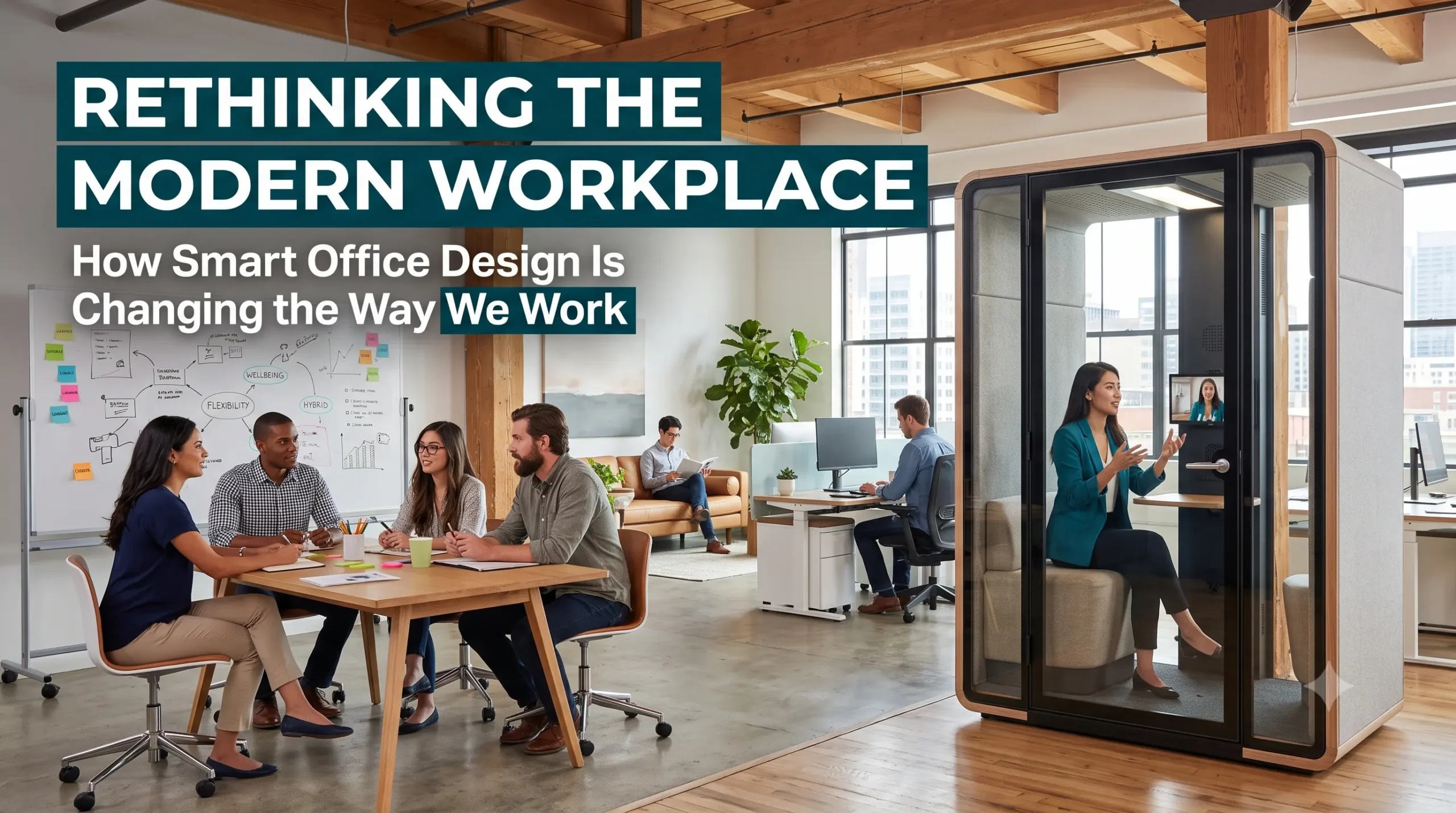
Rethinking the Modern Workplace: How Smart Office Design Is Changing the Way We Work
The traditional open-plan office, once celebrated as the ultimate symbol of collaboration, is quietly being redesigned. As hybrid work becomes the norm rather than the exception, businesses are discovering that the old formula of long desk rows and shared meeting rooms no longer matches how people actually work today. The result is a wave of thoughtful office redesigns focused on flexibility, focus, and wellbeing.
Why the Old Office Model Is Falling Short
For decades, open-plan layouts were meant to boost communication and break down hierarchy. In practice, many employees found them noisy, distracting, and difficult to concentrate in. Constant background chatter, ringing phones, and impromptu conversations made it nearly impossible to focus on deep work. Add in the rise of video calls, and the problem only got worse, since a single loud call could disrupt an entire floor.
Companies have realized that productivity isn’t just about proximity. It’s about giving employees the right environment for the task at hand, whether that’s a quiet space for focused writing, a private spot for a client call, or an open area for brainstorming with a team.
The Rise of Flexible, Purpose-Built Spaces
This shift in thinking has led to a growing trend: smaller, purpose-built spaces scattered throughout the office rather than one uniform layout. Among the most popular solutions are Persy Booths office pods, compact, semi-enclosed structures that give employees a private space for calls, focused work, or small meetings without leaving the main floor. Unlike a traditional meeting room, a pod can be set up almost anywhere and requires no construction, making it an affordable way to add flexibility to an existing space.
These pods typically come acoustically treated, so they dampen outside noise and prevent conversations from leaking out (Framery’s guide to acoustic office design covers this in more depth). Some are designed for a single person taking a video call, while others accommodate small teams for quick huddles. Because they can be moved or reconfigured as a company grows, they offer a level of adaptability that fixed walls simply cannot match.
Balancing Collaboration and Concentration
The smartest office layouts today aren’t choosing between open collaboration and private focus, they’re offering both. A well-designed workplace might include open lounge areas for casual conversation, dedicated quiet zones for deep work, and a scattering of enclosed pods for calls and small meetings. This variety allows employees to choose the setting that best suits their task, rather than forcing every activity into the same environment.
This approach also supports different working styles. Some people do their best thinking in a bustling, energetic space, while others need silence to stay productive. Giving staff the freedom to move between environments throughout the day has been linked to higher job satisfaction and better overall output.
What This Means for Businesses Going Forward
As companies continue to navigate hybrid schedules and changing employee expectations, office design is becoming a genuine competitive advantage. A well-planned workspace signals to employees that their comfort and productivity matter, which can play a real role in attracting and retaining talent.
Businesses don’t need a complete renovation to see the benefits. Small, incremental changes, like introducing a few private pods, rearranging seating to reduce noise, or creating designated quiet corners, can make a noticeable difference without a massive budget.
Final Thoughts
The office of the future isn’t about choosing one single layout that works for everyone. It’s about building a flexible environment where employees can move between collaborative and private spaces depending on what their work demands. As more companies experiment with these ideas, thoughtful, human-centered design is proving to be one of the smartest investments a business can make.