What Is Bug Ralbel28.2.5? – Causes, Solutions, And Prevention
Software errors can appear at the worst possible time. A program may suddenly stop responding, an update may fail halfway through, or an application that worked normally yesterday may begin showing repeated errors. The Ralbel28.2.5 bug is generally discussed as a version-related software problem that can lead to these kinds of issues.
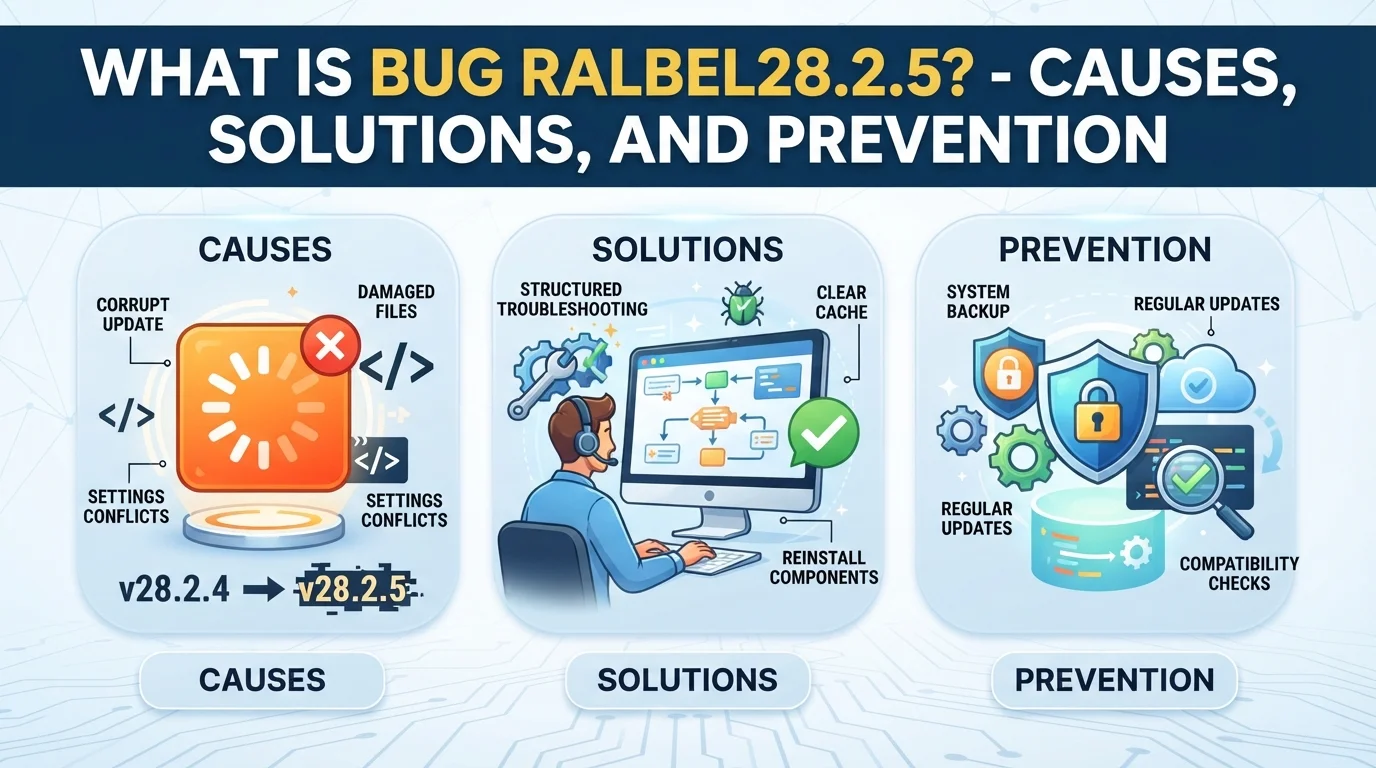
In many cases, the problem is connected with changes made during an update, damaged files, incompatible components, or settings that no longer work properly with the current version. The exact trigger can vary from one system to another, which is why trying random fixes is not always the best approach.
The good news is that most software-related problems can be handled through a structured troubleshooting process. By identifying what changed, checking the software environment, and applying fixes in the right order, you can often restore normal performance without making unnecessary changes to the system.
What Is the Ralbel28.2.5 Bug?
Ralbel28.2.5 is commonly discussed as a software issue associated with a particular version or build. The problem can appear when a software component does not work correctly with another part of the application or when an update leaves files, settings, or dependencies in an unstable state.
The issue may not look the same on every system. One user might experience a crash while another may notice slow loading, failed installation, or a feature that suddenly stops working.
This is why the first step should always be to identify what changed before the problem appeared. If everything was working normally before an update, for example, the update itself becomes an important part of the investigation.
What Are the Common Signs of the Bug?
Recognizing the symptoms can make troubleshooting much easier. Instead of focusing only on the error name, look at how the affected software behaves.
Common signs may include:
- Frequent application crashes or unexpected closing
- Freezing while performing normal tasks
- Slower startup or delayed responses
- Failed software updates or installations
- Plugins or extensions becoming unstable
- Features that suddenly stop working
- Repeated error messages
- Higher-than-normal resource usage
- Problems appearing immediately after a configuration change
Not every user will experience all of these symptoms. The important clue is usually a change in behavior, especially when it happens shortly after an update, installation, or settings adjustment.
What Causes Ralbel28.2.5 Problems?
There is rarely one explanation for every software failure. Several common technical problems can produce similar symptoms.
Corrupted or Incomplete Update Files
An update needs to replace or add several files. If the process is interrupted because of a connection problem, sudden shutdown, lack of storage, or another issue, the installation may not finish correctly.
The program can then contain a mixture of old and new files, creating instability when it starts.
Compatibility Conflicts
Software often depends on other components to perform specific functions. These may include libraries, frameworks, drivers, plugins, or supporting services.
If one component is updated while another remains outdated, compatibility problems can appear. The application may then crash, fail to start, or behave differently from before.
Outdated Plugins and Extensions
Third-party plugins can become a problem after a major software change. An extension that worked perfectly with an earlier release may not behave correctly with a newer one.
This is particularly worth checking when the problem started immediately after an update.
Configuration Problems
Software settings can also contribute to instability. A custom configuration that worked with an older version may conflict with a newer release.
Incorrect paths, permissions, cached settings, or modified preferences can sometimes prevent an application from starting or performing specific functions.
Limited System Resources
Low storage, memory pressure, or heavy background activity can make software problems worse. An application that normally works well may become unstable when the system does not have enough resources available.
Checking available storage and closing unnecessary programs is therefore a useful early troubleshooting step.
What Should You Do Before Trying a Fix?
Before making major changes, take a moment to understand the situation. This can prevent you from fixing the wrong problem.
First, note when the issue started. Ask yourself:
- Did the problem begin after an update?
- Did you install a new plugin or extension?
- Did you change an important setting?
- Did the application stop working after a restart or shutdown?
- Did the installation fail or stop unexpectedly?
Also record the complete error message if one appears. A short code by itself may not provide enough information, while the surrounding message can reveal which component is actually causing the problem.
If the software contains important files or settings, create a backup before attempting advanced troubleshooting.
How to Fix Bug Ralbel28.2.5 Step by Step?
A gradual approach is usually safer than immediately deleting files or reinstalling everything. Start with the easiest solutions and move toward more advanced options only when necessary.
Step 1: Restart the Application
Close the affected program completely and open it again.
Temporary processes can sometimes become stuck after an update or failed operation. Restarting gives the application a clean session and may resolve a temporary problem without changing any files.
Step 2: Restart the Device
If restarting the application does not help, restart the computer or device.
This clears temporary processes and gives system resources a fresh start. It is a simple step, but it can eliminate problems caused by background processes or incomplete sessions.
Step 3: Check for a Newer Update
Open the application’s official update section and check whether another release or maintenance patch is available.
Developers often release follow-up updates after problems are discovered. If a newer version is available, installing it through the official source may resolve compatibility or stability problems.
Avoid downloading a random “fix” from an unknown website. A legitimate update should come from the software developer or another trusted distribution channel.
Step 4: Disable Recent Plugins
If the application uses plugins, extensions, or add-ons, temporarily disable anything that was recently installed or updated.
Then test the application again.
If the problem disappears, enable the extensions individually. This makes it easier to identify the component creating the conflict instead of removing everything at once.
Step 5: Clear Temporary or Cached Data
Applications often store temporary data to improve performance. Occasionally, this data can become outdated or damaged after an update.
If the application provides an official option to clear its cache or temporary data, use that option. Avoid manually deleting unfamiliar system folders because some files may be required for the software to operate correctly.
Step 6: Restore Compatible Settings
If the problem started after changing configuration options, return those settings to their previous values.
Some applications also provide a Reset Settings or Restore Defaults option. Before using it, make sure important preferences or configuration details are backed up.
After resetting the settings, test the application before making additional changes.
Step 7: Repair the Installation
Some software provides a built-in repair feature that checks and replaces damaged installation files.
If this option is available, it is worth trying before completely removing the program. A repair can restore missing or damaged files while keeping much of the existing configuration intact.
Step 8: Reinstall the Software
If the previous steps do not solve the problem, reinstalling may be necessary.
Before removing the program, back up important files, saved projects, or settings. Then uninstall the software using the normal removal process and install a fresh copy from its official source.
A clean installation can resolve problems caused by incomplete updates, damaged files, or broken configurations.
Step 9: Roll Back When an Update Is Clearly Responsible
If the problem appears immediately after an update and the software supports an official rollback option, returning to a previous stable version can be considered.
However, this should be a temporary solution when possible. Older versions may contain security issues or compatibility limitations, so check for a newer supported release first.
How to Avoid Making the Problem Worse?
When dealing with an unfamiliar software error, some troubleshooting methods can create more problems than they solve.
Avoid:
- Downloading unofficial patches
- Replacing system files from random websites
- Using unknown “repair” applications
- Disabling security software permanently
- Deleting configuration folders without a backup
- Installing modified or cracked versions of the software
- Running unfamiliar commands with administrator privileges
The safest repair is normally the one that uses the application’s own recovery options or instructions provided by its developer.
How to Prevent Similar Problems in the Future?
Keeping the software updated and backing up important files can help prevent similar problems in the future. Before installing major updates, make sure your important data is safely stored. It is also helpful to remove unnecessary plugins and extensions because outdated or incompatible add-ons can sometimes create problems after an update.
You should also keep enough free storage on your device so updates and temporary files can work properly. If the software suddenly starts behaving differently, think about what changed recently, such as an update, new plugin, or configuration setting. Finding these changes early can make future troubleshooting much easier.
Final Thoughts
Software bugs can look complicated when they first appear, but the solution often starts with a few straightforward checks. The key is to avoid making several changes at once. Identify what changed, test the simplest solutions first, and move toward repair or reinstallation only when necessary.
If you are trying to fix bug ralbel28.2.5, start by checking the application, recent updates, plugins, configuration settings, and installation files. A restart may solve a temporary problem, while a repair or clean installation can help when important files have become damaged.
Most importantly, use official software sources and keep backups before making major changes. A careful troubleshooting process is much more effective than downloading an unverified patch or changing system files without knowing what they do. With the right approach, you can usually narrow down the cause and get the affected software back to normal operation.